A360
European indices surged on April 8, 2026, led by the IBEX 35 up 3.24% to 18010.00, amid reports of a potential cease-fire.
European stock markets, led by the IBEX 35's 3.24% surge, experienced significant gains on April 8, 2026, with other major indices also rising substantially.
The widespread European rally, potentially fueled by reports of a ceasefire, highlights how geopolitical developments can swiftly and positively impact investor confidence and market performance.
The stark contrast between robust European growth and modest U.S. market changes suggests that regional factors or differing interpretations of global news are driving distinct market reactions.
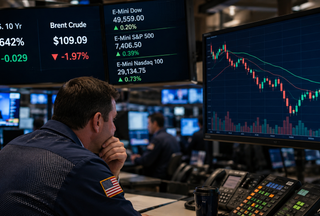
European stock indices posted broad, outsized gains on April 8, 2026, with Spain’s IBEX 35 leading a strong session across the region. The IBEX 35 finished at 18010. 00, up 3. 24% on the day, as multiple benchmarks across continental Europe advanced by more than 3%.
Germany’s DAX recorded the largest percentage rise among the major indices cited, climbing 4. 69%. France’s CAC 40 increased 4. 01%, while the Stoxx Europe 50 Index added 3. 61%. The UK’s FTSE 100 rose 2. 24%, and Italy’s FTSE MIB gained 3. 47%, underscoring a region-wide move rather than a single-market rally.
For Spain, the day’s jump came against a backdrop of notable swings over the past year. The IBEX 35’s 52-week range spans from 11612. 70 to 18503. 40, a wide band that signals substantial volatility during that period. Even with that variability, the index’s one-year performance stands at a 52. 66% gain, pointing to a pronounced advance over the last 12 months.
Officials and market reports cited a potential cease-fire as a factor that may have supported sentiment during the session. The timing of the reports coincided with the sharp rise in European equities, and the breadth of the move suggests investors were responding to a shared regional narrative rather than isolated company-specific developments.
Escalating conflict in the Middle East, particularly involving Iran and the Strait of Hormuz, has led to significant damage to energy infrastructure and heightened fears of prolonged disruptions to global oil and gas supplies. This geopolitical instability is directly impacting international energy markets, driving up prices, and creating inflationary pressures worldwide, complicating monetary policy decisions for central banks.
In the United States, the same day brought comparatively muted index moves, highlighting a divergence in regional market behavior. The DJIA slipped 0. 18%, while the S&P 500 edged up 0. 08% and the Nasdaq rose 0. 10%. The contrast between Europe’s strong gains and the US’s near-flat performance indicates that local drivers, or different readings of global developments, were influencing risk appetite across regions.
What remains uncertain is how durable the shift in sentiment will be, given that the market reaction was linked to reports of a potential cease-fire rather than a confirmed, finalized outcome. Investors will also be weighing the IBEX 35’s proximity to its 52-week high of 18503. 40 after closing at 18010. 00, alongside the index’s already large one-year increase of 52. 66%.