A360
Iran-US talks progress towards a deal on nuclear program, but divergences on uranium and Hormuz threaten breakthrough.
Negotiations between Iran and the US show signs of progress, potentially inching closer to a resolution.
Key disagreements persist regarding Iran's enriched uranium stockpile and navigation rights through the Strait of Hormuz.
Fluctuations in oil prices reflect the market's sensitivity to the uncertain outcome of these diplomatic efforts.
Negotiations between the United States and Iran are reportedly in their final stages, with a US-proposed text appearing to narrow existing differences. However, conflicting statements from Iranian leadership and US President Donald Trump have introduced uncertainty regarding a potential breakthrough in the extended diplomatic efforts.
Iran's semi-official Iranian Students' News Agency reported that the latest proposal from the US has partially bridged the gap between the two parties. This development suggests movement towards de-escalation and a resolution of long-standing nuclear concerns. The agency stated that further progress hinges on Washington abandoning any perceived intentions of military action against Tehran.
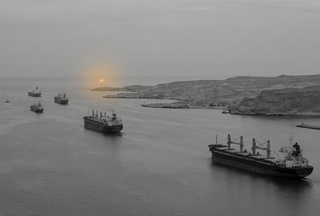
Conversely, reports emerged of Iran's Supreme Leader issuing a directive concerning the nation's enriched uranium stockpile. This directive, stipulating that the uranium should not be exported, initially caused a surge in oil prices. Concurrently, President Trump expressed strong opposition to any toll system proposed by Iran and Oman for passage through the Strait of Hormuz, an international waterway.
President Trump stated unequivocally that the US wants the Strait of Hormuz to remain open and free of tolls. He emphasized its status as an international waterway, noting that no tolls are currently being charged. US Secretary of State Marco Rubio echoed this sentiment, suggesting that any toll system would render a deal with the US unfeasible, adding another layer of complexity to the ongoing discussions.
These divergent stances on critical issues have created ambiguity about the true proximity of a resolution. Oil markets reflected this uncertainty, experiencing significant fluctuations. Brent crude prices dipped below $104 a barrel after an earlier rise, as traders closely monitored developments for signals of the potential return of Iranian oil supplies to the global market.
The precariousness of global oil supply was highlighted by Goldman Sachs, which noted a record drawdown of crude oil and product stockpiles this month. This rapid depletion of global buffer stocks underscores the strategic importance of any agreement that could stabilize energy markets.
For years, the US has insisted that Tehran surrender its enriched uranium, citing concerns over its potential use in developing nuclear weapons. Washington has also demanded Iran commit to a decade-long moratorium on uranium enrichment. Iranian officials have publicly resisted these terms, with President Masoud Pezeshkian reiterating on Thursday that Iran would not compromise its position during negotiations.
Adding to the tense atmosphere, President Trump had previously warned of renewed military actions if Iran did not agree to US terms, a threat he has issued periodically since an April 8 ceasefire. These repeated warnings, coupled with the unresolved sticking points in the negotiations, leave the ultimate outcome of the Iran-US talks in a state of flux, with potentially significant geopolitical and economic ramifications.